Signed in as:
filler@godaddy.com

06.27.26 By JANEL ST. JOHN
On Chicago’s South Side, a new cultural landmark has opened with a mission that reaches far beyond presidential history. The Obama Presidential Center — a 19.3-acre campus dedicated to civic engagement, storytelling, and community — welcomes visitors into a space where history, architecture, and contemporary art converge.
The opening arrives at a pivotal moment in the nation’s story. As America approaches its 250th anniversary, questions about democracy, belonging, history, and collective responsibility continue to shape the national conversation. The Obama Presidential Center enters that dialogue not only through exhibitions and archives, but through the artists whose works invite visitors to consider who we are, where we have been, and what kind of future we imagine together.
From its earliest vision, the arts have been central to the Center’s identity — extending the spirit President and Mrs. Obama cultivated during their years in the White House, when the “People’s House” became a gathering place for artists, thinkers, creators, and communities from across the world. That commitment continues through a commissioned collection that places contemporary art throughout the campus, transforming public spaces into places of reflection, conversation, and connection.
Spanning gardens, gathering spaces, and shared pathways, the collection brings together artists working across generations, cultures, and mediums — from Indigenous drum-making traditions and Afro-Asian Cuban symbolism to conceptual photography, industrial materials, historic ephemera, and locally rooted design. Together, the works explore themes of memory, identity and resilience.
The Center’s campus includes a museum, public library, garden, athletic center, programming facilities, and expansive outdoor spaces designed to welcome everyone from neighborhood residents to visitors from around the world. Throughout the campus, 12 key spaces honor civil rights and social justice leaders whose work expanded the possibilities of American life.
__________
Artwork above: Njideka Akunyilil Crosby, The Obamas: Springing Forth, 2026, Acrylic, colored pencils, charcoal, and transfers on paper. Unframed: 108 x 120 in., Framed: 115 1/8 x 127 5/16 x 3 5/16 inches (HWD) © Njideka Akunyili Crosby, Courtesy of the artist, Victoria Miro, and David Zwirner. Commissioned by The Obama Presidential Center. Photo by: Marten Elder

Days ahead of a star-studded dedication, President and Mrs. Obama unveil their first commissioned portrait by Njideka Akunyili Crosby in the Hope and Change Lobby of The Obama Presidential Center Museum (OPC) in Chicago, IL. (Photo by Taylor Glascock)
Weaving together archival images, family albums, historical ephemera, and symbolic elements, the work connects the Obamas to the generations of artists, activists, and citizens who helped pave their way to the White House.
Akunyili Crosby’s portrait of the Obamas is based on an original photograph she captured of them. She applied her signature process of layering photo transfers to create a monumental work filled with layers of overlapping personal, cultural, and historical references.
The Nigerian-born, Los Angeles-based artist is an award-winning figurative painter and a 2017 MacArthur Genius Fellow. She earned her BA from Swarthmore College and her MFA from Yale University.

With more than 30 artist commissions, the center brings together some of the most influential contemporary artists working today. The Center positions art as a powerful way to engage history, community, and the evolving American story by bringing together artists whose practices examine those themes and also the power of shared spaces.
The works of artists including Mark Bradford, Lorna Simpson, Maya Lin, Rashid Johnson, Idris Khan, Magdalena Campos-Pons, Jeffrey Gibson, Theaster Gates, Carrie Mae Weems, Julie Mehretu and many others, create a visual dialogue about ancestry, resilience, cultural memory, democracy, and the ongoing work of building a more inclusive society. The result is a collection designed not simply to be viewed, but experienced.
---------------
(Photos above and below) The Obama Presidential Center. Torch Song by Allison Saar at The Obama Presidential Center Museum in Chicago, IL. All photos courtesy of The Obama Foundation.
Valerie Jarrett, CEO


Celebrate America's 250th at the Obama Center
Suzanne Jackson & Robert Earl Paige are still shining
Broken Men by Rashid Johnson mural in the Eleanor Roosevelt Fruit & Vegetable Garden Classroom at the Obama Presidential Center in Chicago, IL. Courtesy of The Obama Foundation

Jules Julien, All Together at the Obama Presidential Center. Courtesy of The Obama Foundation

Still Holding the Scent of Flowers by María Magdalena Campos-Pons at The Obama Presidential Center. Courtesy The Obama Foundation

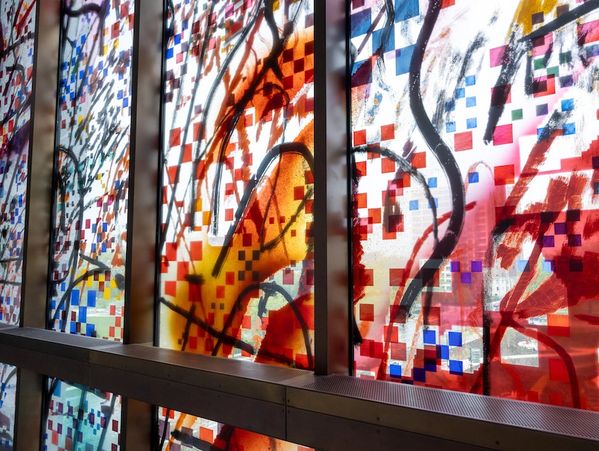
Uprising of the Sun by Julie Mehretu at The Obama Presidential Center Museum in Chicago, IL. All photos courtesy of The Obama Foundation.
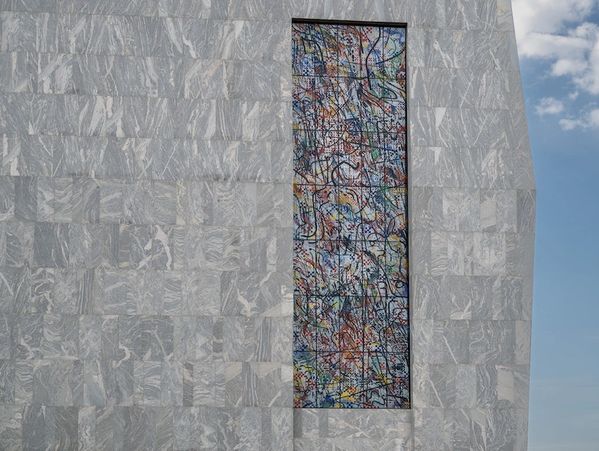
Uprising of the Sun by Julie Mehretu at The Obama Presidential Center Museum in Chicago, IL.
Bird Book by Richard Hunt at The Obama Presidential Center.
Studies for Gates’ installation at his studio in Chicago, 2025. Courtesy of Theaster Gates Studio