Trend and Texture

Trend and TextureTrend and TextureTrend and Texture
Home
About
Contact Us
Obama Center

Trend and Texture

Trend and TextureTrend and TextureTrend and Texture
Home
About
Contact Us
Obama Center
More
  • Home
  • About
  • Contact Us
  • Obama Center
  • Sign In
  • Create Account

  • My Account
  • Signed in as:

  • filler@godaddy.com


  • My Account
  • Sign out

Signed in as:

filler@godaddy.com

  • Home
  • About
  • Contact Us
  • Obama Center

Account

  • My Account
  • Sign out

  • Sign In
  • My Account

AMERICA AT 250

The Flowers They Deserve

SUZANNE JACKSON

Portrait of Suzanne Jackson, 2025, by Steven Probert
 

ROBERT EARL PAIGE

Robert Earl Paige with his designs, courtesy of the Hyde Park Art Center

TWO ARTISTS, ONE EXPANSIVE AMERICAN STORY

The Long View: Why Robert Earl Paige and Suzanne Jackson Matter Now

06.29.26 By JANEL ST. JOHN


As museums across the country revisit artists connected to the Harlem Renaissance and Black Arts Movement, two pioneering figures are finally receiving the broad institutional recognition their work has long deserved. This year, major exhibitions and honors have placed Suzanne Jackson and Robert Earl Paige at the center of a national conversation about art, history, and cultural memory.


Though their practices could not be more different, both artists emerged during a period when Black artists were redefining American culture on their own terms. Paige transformed textile design into a vehicle for celebrating African diasporic aesthetics, bringing bold color and pattern into everyday American homes. Jackson forged a radically independent path as a painter, poet, curator, and community builder, creating luminous, experimental works that centered beauty, spirituality, and imagination at a time when Black artists were often pressured to make overtly political statements.


Today, museums are embracing the full complexity of their legacies. Chicago-based artist and educator Robert Earl Paige, born in 1936, is the 2026 recipient of the Design Visionary Award from Cooper Hewitt, Smithsonian Design Museum. His installation at the museum coincides with renewed attention following The United Colors of Robert Earl Paige. The 2024 show at the Hyde Park Art Center, which was the largest exhibition of his work to date, earned national media attention. This year, his alma mater, the School of the Art Institute of Chicago, awarded him an honorary doctorate in recognition of a career spanning more than six decades.

The Stories We Choose to Remember

Their renewed visibility arrives at a particularly significant moment. As the United States begins commemorations leading to its 250th anniversary, questions about whose stories are preserved, celebrated, or omitted have become increasingly urgent. Jackson and Paige offer a powerful reminder that the American story has never been singular. Their work expands our understanding of Black artistic expression beyond familiar narratives of protest and struggle, revealing histories of innovation, beauty, entrepreneurship, community-building, and creative freedom. To encounter their work today is to encounter a richer, more complete portrait of American culture itself.


Suzanne Jackson, born in 1944, is likewise experiencing a long-overdue renaissance. Suzanne Jackson: What Is Love, the first major retrospective of her career, traces six decades of artistic experimentation and has introduced new audiences to a body of work that defies easy categorization. First presented at San Francisco Museum of Modern Art, and now on view at Walker Art Center, the exhibition highlights an artist whose joyful explorations of color, light, and materiality challenged assumptions about what Black art could be. The show travels to Museum of Fine Arts, Boston in the fall.


Suzanne Jackson, Migration, 1998; the Shah Garg Collection; © Suzanne  Jackson, courtesy Ortuzar, New York; Photo: Timothy Doyon
 

Installation view of The United Colors of Robert Earl Paige at the Hyde Park Art Center, Chicago; Photo Tom Van Eynde

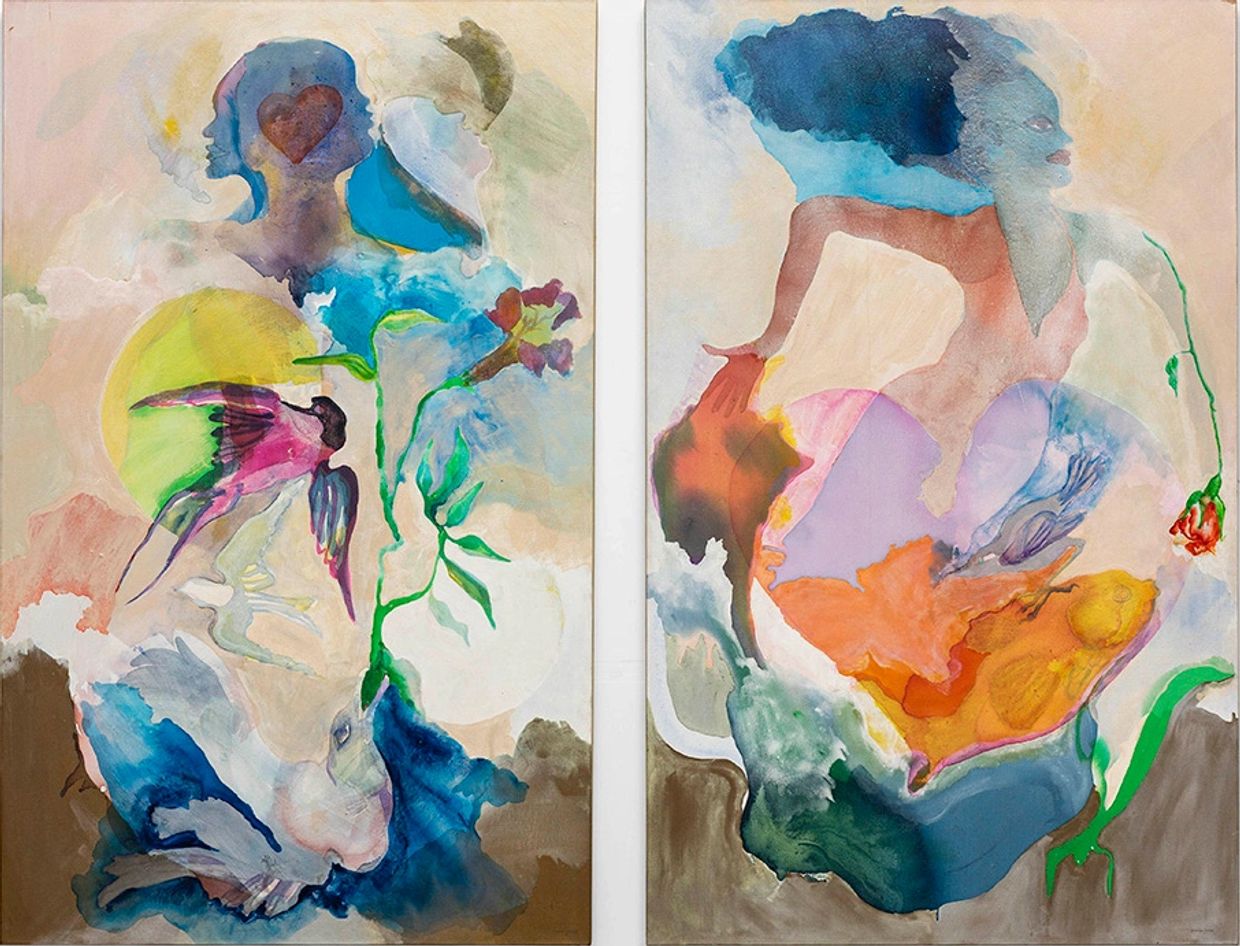
Before the Museums Came Calling

Long before major retrospectives, museum commissions, and lifetime achievement honors, Robert Earl Paige and Suzanne Jackson were helping to build Black cultural infrastructure from the ground up.


Both came of age during the ferment of the 1960s, when artists, writers, musicians, and activists associated with the Black Arts Movement sought to create work that reflected Black experiences, histories, and aspirations outside the confines of predominantly white institutions. Yet neither artist followed a prescribed path. Their careers demonstrate just how expansive - and often misunderstood - the movement truly was.


Robert Earl Paige became member of the Chicago Black Arts Movement helping to define the movement's work and impact in the city. After graduating from the School of the Art Institute of Chicago in 1962, he developed a practice that moved fluidly between fine art, fashion, interiors, and textile design. At a time when African-inspired aesthetics were increasingly becoming symbols of Black pride and self-determination, Paige brought those influences into everyday life through textiles, furnishings, and wearable design.


His breakthrough arrived in 1972 when Sears released a collection of home furnishings based on his designs, making Paige one of the first Black designers to introduce African-inspired patterns and motifs to a mass American audience. The collection was carried in 126 stores in 56 cities! Decades before conversations about representation and inclusion became commonplace in the design industry, Paige was proving that Black aesthetics belonged not only in galleries and museums but in living rooms, bedrooms, and public spaces across the country.


While Paige was transforming American design culture in Chicago, Suzanne Jackson was building something equally revolutionary on the West Coast.

Jackson's Gallery 32

In 1968, she founded Gallery 32, a self-funded exhibition and community space operating from her Los Angeles studio. At a time when Black artists were routinely excluded from mainstream galleries and museums, Gallery 32 became a vital gathering place for artists, activists, and cultural organizers. The space welcomed members of the Black Arts Council and the Black Panther Party while providing exhibition opportunities for emerging artists who would later become central figures in American art history.


Among its many accomplishments, Gallery 32 hosted the groundbreaking 1970 Sapphire Show, widely recognized as the first survey exhibition devoted to African American women artists in Los Angeles. The gallery also provided an early platform for artists like Betye Saar and David Hammons, exhibiting his now-iconic body prints years before museums embraced his work.


Jackson's influence extended far beyond Southern California. In 1972, she helped organize nearly 180 artists for the Black Expo in San Francisco, creating opportunities for visibility and exchange at a time when institutional support for Black artists remained scarce. Her work as a curator, organizer, and advocate helped shape an ecosystem that allowed other artists to thrive.

On Their Own Terms

Yet Jackson's own artistic practice often stood apart from expectations placed upon Black artists during the era. Like Vivian Browne, she resisted the pressure to make only politically charged work, instead pursued a visual language rooted in beauty, spirituality, nature, and emotional depth. Her paintings explored color, light, atmosphere, and abstraction without abandoning questions of identity. In doing so, she challenged the notion that Black art had to be defined primarily through protest.


That commitment to artistic freedom now appears remarkably prescient.


Today, both Paige and Jackson complicate simplified narratives of the Black Arts Movement. Their work reminds us that the movement was not solely concerned with resistance, though resistance was certainly part of it. It was also about imagination. About building institutions where none existed. About claiming space for beauty, experimentation, entrepreneurship, and self-definition. And perhaps most importantly, it was about expanding the possibilities of what Black art - and American art - could become.


As we begin 250th anniversary celebrations, stories like  Suzanne Jackson and Robert Earl Paige offer audiences an opportunity to experience a fuller, more nuanced American story - one that embraces complexity rather than simplification and acknowledges the many voices that have shaped the nation’s cultural landscape.

Suzanne Jackson, Wind and Water, 1975; The Museum of Modern Art, New York, acquired through the generosity of the Modern Women’s Fund, Alice and Tom Tisch, Anne and Joel Ehrenkranz, Marie-Josée and Henry R. Kravis, Michael S. Ovitz, Ronnie F. Heyman, and Pamela J. Joyner and Alfred J. Giuffrida; © Suzanne Jackson, courtesy Ortuzar, New York; Photo: Ruben Diaz

 

Suzanne Jackson, High Frost, 1982; the Joyner/Giuffrida Collection; © Suzanne Jackson, courtesy Ortuzar, New York; photo: Swann Galleries
 

Robert Earl Paige textile on display in The United Colors of Robert Earl Paige at the Hyde Park Art Center, Chicago. Photo: Tom Van Eynde
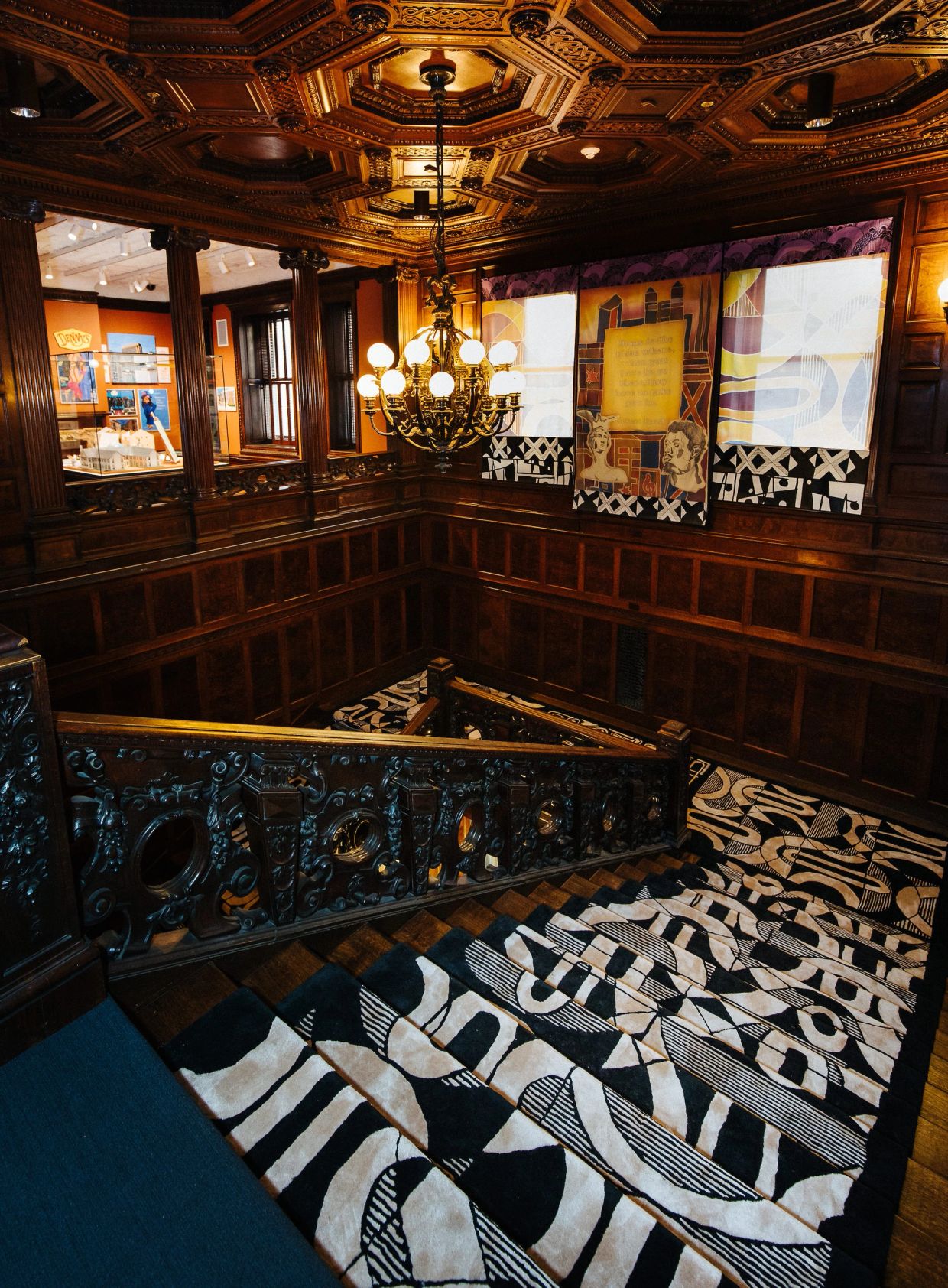
Robert Earl Paige, Fahara: Chicago in View, on view at Cooper Hewitt, Smithsonian Design Museum (New York, New York, 2024–2025). Photo: Nikola Bradonjic Photography
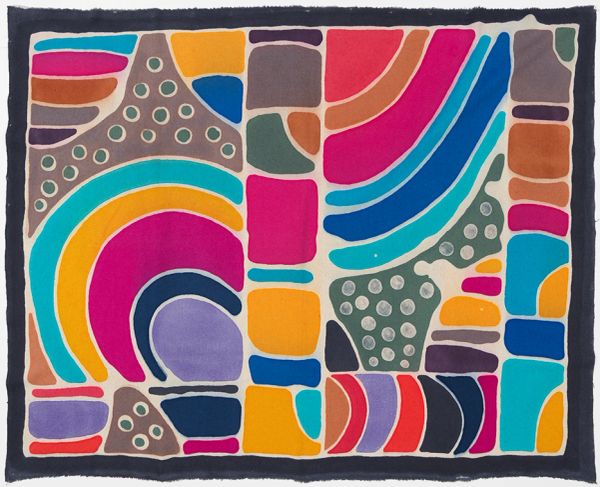
Robert Earl Paige, Rhythmic Patterns. Hand-painted and dyed crepe de chine silk; 34 x 44 inches (1992). Photo: Tom van Eynde. Courtesy of Hyde Park Art Center

Suzanne Jackson, High Frost, 1982; the Joyner/Giuffrida Collection; © Suzanne Jackson, courtesy Ortuzar, New York; photo: Swann Galleries
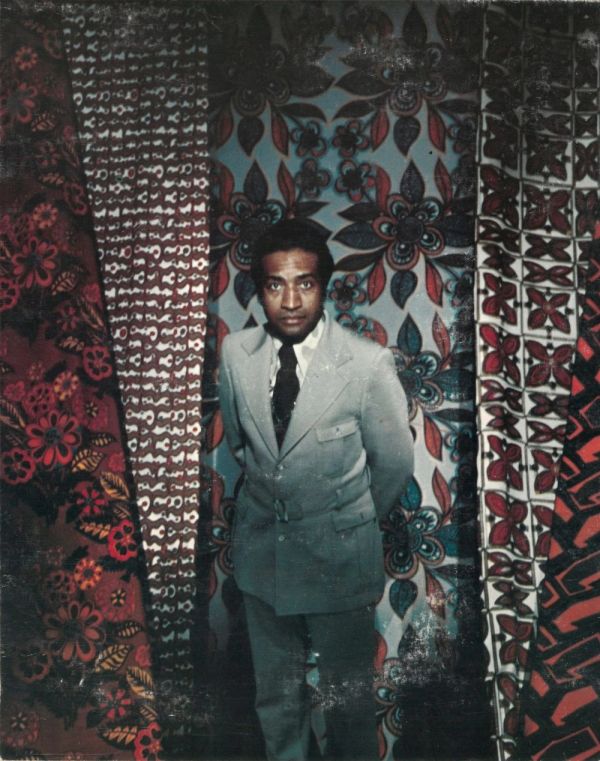
 

Robert Earl Paige with his textiles in the 1970s. Courtesy Hyde Park Art Center.
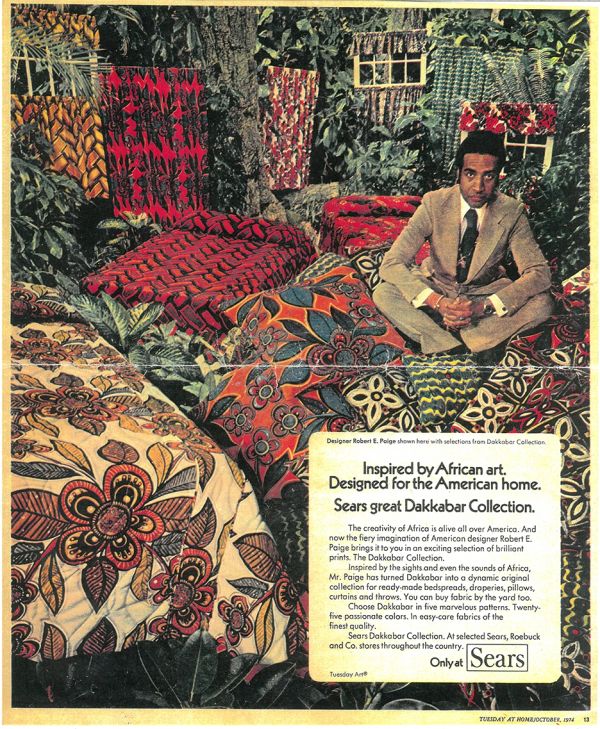
Robert Earl Paige, Dakkabar Collection. Digital scan of archival advertisement (1973). Photo: Courtesy of Robert Earl Paige

Robert Earl Paige Exhibition at Hyde Park

#

OBAMA CENTER

#

OUT OF MANY

#

AT THE VANGUARD

Copyright © 2026 Trend & Texture - All Rights Reserved.

Powered by

  • Home
  • About
  • Contact Us
  • Obama Center
  • Two Artists

This website uses cookies.

We use cookies to analyze website traffic and optimize your website experience. By accepting our use of cookies, your data will be aggregated with all other user data.

DeclineAccept